















Search
We export flamenco to all countries in the world.
WORLDWIDE SHIPPING
Shopping Cart
Method for playing the castanets

Method for playing the castanets

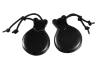
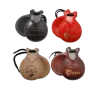
The castanets are a percussion instrument with centuries of history. Its origin goes back to the year 1000 B.C, specifically to the fenicians, an inminent commercial flourishing culture in the Mediterranean area countries: Greece, Turkey, Italy, Spain, etc. However, through history Spain has been the only one that has preserved and developped its use since then. The castanets are part of our cultural heritage, in fact, they are consider one of the national instruments. The castanets are often used to give color and spanish character to the music. 


Its also a very recognizable instrument in flamenco dance and its made of all shorts of materials. The plastic castanets, usually cheaper and with less quality, make an strident noise when they are hit. But there exists also wooden ones, ebony, palisander or fiberglass, that are mostly used by professionals. This instrument is formed by two shells with two small ears that have perforated holes through which a cord is passed, to tie both parts.


Proper way of using the castanets


First, you have to ensure that each of the castanets has a differentiated sound, one is higher, the other lower. You have to put the one with the higher pitch in the right hand and the other one on the left. You have to put them in the thumbs of each hand, first the part that has the knot and then the other. It is very important that the castanets are well fitted to your thumbs, but they do not have to squeeze. 


Position of the hands


To properly manage them is really important to position your fingers correctly. The right way to do it is putting the tips of the fingers faced and the palms turned to your body. The castanet of the right hand has to be played with the pinky and ring fingers, and middle and index fingers. In the left hand you have to play it with the middle, ring and pinky fingers at the same time.


Rythm


The rythm has to start with the right hand, counting the last key with the sound of the left castanet. To achieve a good rythm is convenient to know that the sound of the castanets is based in different combinations of five independent elements.


  • CA-RRE-TI-LLA: This element is only used in the right hand. Trying to move the wrist as little as possible, you start to play the CA-RRE-TI-LLA, which consists of four strokes, CA, with the pinky; RRe, with the ring finger; TI, with the middle finger; LLA, with the index.

  • TAN: That is how it is called the stroke that you have to do after CA-RRE-TI-LLA. It is played with the ring and middle finger simultaneously, without any notice of different time in between the four strokes of CA-RRE-TI-LLA- and TAN , even though this last one is played a bit stronger.

  • TIN: This sound has to be heard after CA-RRE-TI-LLA-TAN.  It is played with the ring and middle fingers of the right hand simultanously. 

  • TIAN: This is how it is called when the sounds TIN and TAN sound together.

  • POSTICEO: This sound consists in the clash of the two castanets. In order to do it you have to bring your right hand to the left and clash them together. 


IMPORTANT: If you are interested, here you can buy castanets from our web of Flamencoexport.

Read more →
The language of the fan

The language of the fan


The fan, aside from becoming an indispensable part of the clothing of an era, constituted an ideal instrument of communication in a time where liberty of expresion for women was totally coerced. When the late XIX early XX century ladies went to the balls they were always accompanied by their mother or a maid, so they could look after the young woman's behavior. The maids were really strict with the tasks entrusted to them, so the ladies had to create a new way o communicating with their lovers and try to be unnoticed. That is why there were different fan languages, but all of them had a common rule, the placement of the object in the four directions with five different positions in each one. And with that system, they did represent each letter of the alphabet.

Read more →
Los accesorios de flamenca de moda en 2016
flamenco flowers

Los accesorios de flamenca de moda en 2016

¡El blog de Flamencoexport ha vuelto para quedarse! Y vuelve para contar las mejores tendencias de la moda de accesorios flamencos de 2016. Los complementos son, después de un bonito vestido, el segundo componente más importante en el conjunto de cualquier flamenca para lucir elegantes en la Feria o en el Rocío. Pues, ¿de qué sirve un buen traje de gitana si los complementos no están a la altura?


Aquí te damos las claves y unos consejos para escoger tus accesorios a juego con tu personalidad y tu traje, ya que junto con los pendientes, los mantoncillos, la peineta y las pulseras, hay un complemento protagonista: la flor de flamenca.

Read more →
La Feria de Abril in Seville
Seville News

La Feria de Abril in Seville

Feria de Abril 2013 en Sevilla
  La Feria de Abril en Sevilla

The space destined to the celebration of the Feria de Abril is situated between Los remedios and Tablada ,and they are divided in 3 sectors: El Real de la Feria , la Calle del Infierno and the car park. The fairgrounds (without any publicity or advertisement)is regulated by a strict normative which keeps the visual charming of the little village which rises up every year in Los Remedios.

­­­The Real de la Feria is called like this  because of the real (25 cents old spanish coin)that the driver charged to the people in order to drive them to the fair.


In the past Real de la feria was called to all the fair area. After, Real de la feria was the main promenade where the horses cross over and where the stands are placed.


The fair space has an area of 275.000 m2 distributed in 25 blocks and 15 streets.


Its paved streets ans its sidewalks are decorated with thousands of lanterns which will illuminate the fair nights and are distributed in the following way: The Real’s road are crossed by thousand of little lamps and traditional lighting baroques ornaments all hold up by wood posts painted in white and ornamented with vegetables garlands.


During the day the people usually ride the horses whereas the night is for going party.


The car park are placed in the nearby of the fairgrounds and the center of the Real de la feria is connected by free buses.


Read more →
Flamenco Export Help
Order status Customer Service

(+34) 91 542 72 51.
We’re open from Monday – Friday 10h-13:30h / 17:00-20:00h and Saturdays 10h-13:30h (GMT + 1).

 
In 2024, we will be closed for holidays on the 1st and 6th January, 28th, 29th, and 30th March, 1st, 2nd, and 15th May, 25th July, 15th August, 12th October, 1st and 9th November, 6th, 7th, and 25th December.
 
Our shop is located in Calle Campomanes nº 4, Madrid 28013 España (Ópera Metro Station)