Search
We export flamenco to all countries in the world.
WORLDWIDE SHIPPING
Shopping Cart
Shawls and combs, perfect accesories

Shawls and combs, perfect accesories

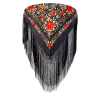
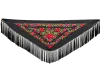
The manila shawls are square silk cloths decorated normally with vibrant colours with flowers, birds, etc, and finished with an exterior border with fringes. Its origins go back to the trade routes created by the spanish Empire with the asiatic continent, more specifically with China and Filipinas. It is from there where the shipments of oriental merchandise used to come, in between those things there were the shawls. Its popularity increased in Spain initially due to the prohibition of the Catholic Monarchs in 1492 of the use of veils. Moor women started, then, to use this oriental shawls to cover their heads and faces. 


Originally they were made in large sizes and in silk, and the decorations used to reflect the oriental flora and fauna with chrysanthemums, bamboos, dragons and birds originals from those lands. Over time and with the increment in the spanish demand they started to modify the shawls changing the embroidery with roses and carnations, and in Spain they introduced the fringes, original from the arab culture. This fringes were placed with silk thread and using the macrame and crochet techniques. The typical colours used to be black, white, ivory and red. The manufacture process started with the creation of a paper template in which there were made several perforations. Then, this template was used to create the marks with chalk over the cloth, and afterwards, with the help of a racket, the cloth was carefully embroidered. The work was finished with the placement of the fringes. In order for the shawls to arrive in the best possible condition to their destiny, special cases were manufactured in Filipinas to transport them. Squared boxes with lacqued and golden wood, decorated with mother-of-pearl inlays and chinese decorative motives


As for the right way of using them, the most common is on top of the shoulders, but also tied on the side or at the height of the hips. And for the proper way of storage them there is an expert way of folding it, though for most people who doesn't know how to do it, it is recommended to hang them in the wardrobe with a plastic cover over it. In case it is needed you can flip it over and gently go over it with the steam iron.

 
Regarding the types of manila shawls that exist, there are two traditional kinds that can be mentioned. On one hand there are the cigarreros (inmortalized in the Carmen de Bizet opera), decorated with big roses and carnations, embroidered in vibrant colours, with bamboo branches and flowers. On the other hand, there are the isabelinos, whose borders are decorated with flowers but the center part is empty. Each of the flowers that used to decorate the shawl had a special meaning: the violets were related to purity, the daisies to impatience, the roses to secrets and the sunflowers to loyalty. 


This way, little by little they became more and more popular until they ended up replacing classic shawls and headscarves in the XIX century. And over time a lot of new workshops began to appear in Sevilla to create their own collections. Also, the flamenco dancers borrowed the idea and integrated it into the dancing. Its use, however, was really complicated due to the fact that only the most expert dancers were able to use them in their dances as if the shawls were an extension of their bodies. 


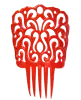
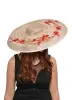
The combs, on the other hand, were feminine ornaments for the hair with a convex body and a group of spikes that fit in the bun. Originally they were manufactured with tortoiseshell, but this days they are mostly made out of synthetic materials. They became traditional in Spain at the end of the XVIII century, and the shawl is often a classic complement for it, since it stylizes women's figure. 


IMPORTANT:

If you are interested in buying any shawls or combs, you can visit our website were we have a huge selection in different colours, styles, etc. This are the best accesories for your flamenca dresses or to acompany your dances on stage. 


Read more →
The importance of the flamenco shoes

The importance of the flamenco shoes

Flamenco shoes are one of the most important parts no just of the flamenco dance, but also the dress code and the music. The tapping sound of a flamenco dancer its reinforced by this special shoes, since they are a vital part of this style.


The term flamenco shoes normally refers to women shoes, since men generally use boots. This special shoes are particularly important because they are used as percussion instruments to acompany the music. This is like that because they have special nails in the heels and caps of the shoes.


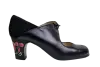
A traditional flamenco shoe tends to be in red or black colours, and normally matches the beautiful dresses. The heel length can vary but usually mesures between 2 and 7 cm. Also this shoes usually have a ribbon or tie that crosses over the foot and is fixed to the ankle, designed to mantain the feet on their place. Depending on the dress, you have to decide what colour and kind of shoes are the best for you.


The shoes can be purchased anywhere in the world, but most professional dancers prefer to ask for theirs to traditional spanish manufacturers that produce handmade and customizable products. The cost of an authentic pair of shoes is not really excesive. Having the right shoes can be a game changer for a dancer, and the ones who dedicate their lives to this know that they have to take care of their feet since their art is really rigourous.

To choose the best flamenco shoe is important to have some things in mind: colour, material (leather, suede, syntethic), the type of heel (standard, reel, cuban), the size of the heel, buckle or ribbons and if you want nails pre-installed or not (often they are sold without nails to practice). Also the quality of the shoes changes depending of the level of the dancer. There are amateur or students shoes, semi-professional, professional, and elite for dancers that have been in the scene for a while.


On the other hand, taking good care of the shoes would prevent them from become stiff. Hence, you should keep them in a fresh and dry environment. After practicing with them let them air dry for several minutes and then bag them so they stay out of the dust and other enviromental elements. Also it is really important to clean and treat the leather by softly brushing and moisturizing it. When the creme gets absorbed then youn can use a shoe polish, and finally afterwards you can wipe it with some cloth or the brush. And, of course, if you use nails on the shoe remember to take them to get changed when there is some missing or worn-out. This way the shoes will last a lot longer.


Some of the most notorious flamenco shoes manufacturers in Spain are:


  • Begoña Cervera: this is the leading company in which most of the flamenco professionals trust. It has been working in the artisanal products market for more than a decade, mixing tradition with comfort, design and innovation.
  • Gallardo: the shoes of this business are completely handmade in the traditional way. It is a very well reknown brand, recognized by their excellent quality and comfort, and used by a lot of flamenco artists and dance companies. Gallardo also can customize them following the clients wishes.
  • Menkes: This prestigious brand uses really modern technology to create their shoes, but they also keep the traditional concept of the artisanal shoes manufacturing process. They guarantee a longevity of the shoes for at least 50 years.
  • Roberto Garrudo: he creates handmade shoes with high quality and made with the best materials on the market.
  • Bulería Sabates: this spanish shoe enterprise, located in Alicante, is specialized in women's flamenco shoes with original desgins. Their shoes are handmade with really good materials.

IMPORTANTE:

If you are looking for a pair of good flamenco shoes, please visit our website www.flamencoexport.com. We have a wide variety of them from some of the best brands in the market like Begoña CerveraGallardo Maty. And for those who are looking for something a bit more economic we also have a wide selection of them.


Read more →
2017 Flamenca dresses trends

2017 Flamenca dresses trends

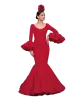
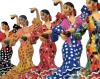
La Feria the Abril is getting closer and closer, therefore, for everyone who is thinking about going but doesn't know what to wear during those days, here it goes a list of the new 2017 trends, and what you will be able to find in our store of Flamencoexport.


  • The urban flamenca style will be a point to highlight this year and it will be seen in all shorts of shirts, jackets, pants, etc.
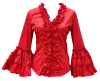
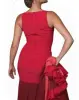
  • The sleeves will be the biggest protagonists this season. This year they have become the main and most important part of the flamenca dresses, and most of them are created in a big size so they are striking and seemed like a distintion sign.


  • The polka dots will continue to be an important part of the new dresses, even though this year there will be different combinations of sizes, colours and designs. 


  • Blue, mint green and yellow: these will be some of the colours that will stand out this year and will become an alternative of the classic red. Yellow is also specially suitable for tanned people.


  • The floral patterns will become also, this year, one of the most important points. There will be diffent designs with gradients, patterns and colours.


  • A high waist line with frills with a big fall will also be relevant factors. Materials like knit fabrics, lycra, silk and gauze will also be used in this types of dresses. Also, some of the dresses will have a lot of volume.


  • Fringes will become the main thing this season. They will not be exclusively an element used in accesories, but they will be a very important part of sleeves, shirts, tops and flamenca dresses in general.


IMPORTANT: 

If you are interested in any of our dressses or you are looking for a more economic option you can visit our web page flamencoexport@flamencoexport.com. Also you can check our newest Mari Cruz 2017-2018 colection or search any other options in our outlet section.


Read more →
The history and magic of the fan

The history and magic of the fan

A fan is an instrument and a fashion accesory created so that with a rythmic wrist movement it can be easily moved and it can help to cool down the environment. Its origins are believed to be in the East, and its creation is delicate, special when it is made with artistic designs and quality materials. In China it is a millenary tradition, in fact, it goes back to the emperor Hsien Yuan times, around the year 2697 B.C. However, the fans were also used by egipcians, babilonians, persians, greeks and romans. The egipcian fans used to be large, fixed, with a semircircular shape, feathers and long handles. Its function used to be double: to give air and to shoo away the insects. Over time the fans became decorative and an indicative of the power someone had. On the other hand, the romans called it flabelo, and the ones used to scare the insects were called muscaria.


In the East, during the Middle Age, the fan became part of the christian liturgy and was used for the consecration, to protect the Eucharist from the insects and refresh the assistants. After the XIV century it fell into disuse in the roman church, but it was preserved in the greek and armenian churches, where it receives the name of rhipidion. The fan was also known by incas and aztecs, since between the gifts Moctezuma gave to Hernán Cortés there were six feather fans. And nowadays they still made them in different places all over the world, like in Spain, where the fan has become the most characteristic element of our culture and, of course, of the flamenco dance.


Morphology and types of fans


The fans are divided in two parts, the body wich is the area that moves the air and is composed by the linkage and the fabric, and the handle, that allows to manage the instrument with ease.


Fixed fans

This kinds are flat and generally hold by a handle in different sizes. Some of then are symmetric, and have a rounded layer fixed to one end. Other have a cardboard rectangular layer, fixed on one side to a rod that works as a handle. They are made in several materials like carboard, palm tree leafs, fabric or feathers.


Foldable fans

Semircicular fans made with various equal plain rods of wood, ivory or synthetic material, attached at the base with a small nail. The rods are put together on the other side with a wide, normally decorated, piece of fabric or paper. The fan opens in a semicircular shape. This are composed of:


  • Baraja: foldable skeleton of the fan.

  • País (Body): fabric adhered to the skeleton. The fans that don't have this part are denominated just baraja.

  • Varillas (Rods): drawn or painted wooden strips. There are two sections:  the decorated part is called fuente (fountain), and the guide to the exterior part of the rods that covers the fabric.

  • Cabera, pala o varillas maestras (master rods): first and last rod, wider than the rest. In the luxury fans they can end up being authentic artworks of micro-scupltures. jewellery and engravings. Often, this exclusive models have in their heads the initials of the owner. 

  • Calado: holes made over the rods that help to decorate them and to increase its aerodynamics.


The manufacture of a fan

The manufacture of the fan requires the collaboration of several artistic categories: a painter to decorate and illustrate the body; an sculptor (ivory, bone, shell, nacre) or engraver (woods) to drill the rods; and in the most luxurious models a goldsmith (metals). With them also work different artisans that are in charge of manage the precise cut of the rods and the folding and pasting of the fabrics. The independence of each job makes it possible to create every part in different specialized workshops. The stages of the manufacturing process of a fan tends to be like this:


  • Cut of the rods, in parcels and with a template.

  • Polished, sanding and sharpening of the rods (one of the most delicate processes consist in sharpening the guide of the rods in the fabric area so it doesn't get bulky).

  • Draft of the rods with awls, using embossing and carving techniques. 

  • If sculptors, graving artists and goldsmisths do a great job with the rods, the same happens with painters and its drawings, polychromy and golden of the body of the fan.

  • The manufacturing process its almost done when, grouped in packs of thirteen, sixteen or twenty four, and closed on the sides with two pleats, the whole thing is drilled on the bottom side, making a nail go through a hole and afterwards is riveted with two rosettes.

  • The body, whether it is made of paper, fabric, vellum or lace, is mounted on this skeleton. This materials can cover, on both sides, the rods or, in the case of the lace fans, just one of them. The fans without body, whose rods are attached together with zig-zag folded tape, recive the name of baraja. On this kind, the ivory ones of master artisans like the french Martain or the oriental types with silver decoration, have had a long tradition. The mechanization of the workshops has helped the production of the ivory fans, which before was a really delicate task. Not so the nacre ones, whose decoration has to be totally handmade since it doesn't admit a mechanic process.


Styles

It is known that before the folding fan showed up,  some where already elaborated with lace and feathers. And in terms of the traditional folding type, it has suffered a long evolution and there has been diverse styles. In the XVI and XVII centuries, the wooden or ivory fan, with body made of fabric or embroidered kid, used to be of short flight. In the XVIII century the fan stop being an exclusive accesory of the upper class, and the wooden kind with short flight and reduced fabric became really popular. In the first half of the XIX century, the small ones from the empire era were really trendy. With the Romanticism they became bigger with a golden, decorating filigree, that was original from the pericón (big fans). In both eras it got imposed the novelty of the printed paper with engraving. On a parallel note, at the end of that century it was really frequent to use painted gauze and lace in the creation of big fans. 


Spanish fans


The first master fan artisans known in Spain are from the XVII century: Juan Sánchez Cabezas, Juan García de la Rosa, Francisco Álvarez de Borja o Jerónimo García. Others that worked with them were painters like Duarte de Pinto y Juan Cano de Arévalo. The technical defaults of the spanish fans provoked that the production was exceeded at the end of the XVII century by french and italian manufacturers. The supremacy lost was not reestablished until the last quarter of the XVIII century, when Carlos II's government decided to subsidize this industry, bring a good master in this task from Italy and limit the entry to Spain of foreign fans. Under the protection of Floridablanca count, Eugenio Prost, french artisan, settled himself in Spain. He, with the help of his wife, put the spanish quality of the fans high enough to match the rest. Almost at the end of the XVIII century the fan masters artisans guild became official with the foundation of the Valencia Real Factory of Fans. Over time, slowly but surely, the fan became part of our culture. Used initially on the hottest days of the year to refresh the environment, became one of the most important parts of our tradition, specially in the flamenco field.


IMPORTANTE
In Flamencoexport we have a selection of artisanal fans, made by experts, decorated with a big variety of designs, and customizables. If you are interested in finding the perfect fan for you, visit
 our website and look at our main products.

Read more →
Feria de Abril. Tradition and fiesta.

Feria de Abril. Tradition and fiesta.

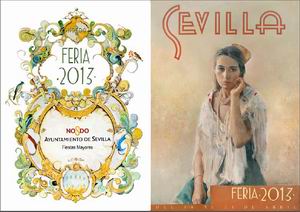
Since la Feria de Abril is around the corner and it is only a month away, we are going to show you on our blog some of the novelties of this year, and a summary of some historic details and curiosities about the event, so we can start preparing for it and learn a little more about this really popular fiesta. 


In terms of news, this year the biggest highlights are that la Feria will add one more day of fiestas and it will take place from the 30th of July to the 6th of May. This was approved at the end of last year through a municipal ordinance in order to take advantage of the touristic pull of the weekend. On the other hand, under the name 'Sevilla universal culture, between Murillo and the Expo of 92', the gate of the Feria de Abril 2017 will be dedicated to the fourth centenary of the painter's birth, and to the 25 years of celebration of the Universal Exposition. This will represent the bottle ovens of el Monasterio de la Cartuja, old clay factory of Pickman, and it will be flanked at the top by this two ovens with the orange bowl, the symbol of the Expo, above the arcs of el Paseo del Futuro of the universal exhibition. 


IMPORTANT:

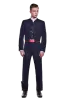
If you are thinking of visiting la Feria de Abril de Sevilla this year and you don't know what to wear, you can visit our web pages of Flamencoexport, where you would find beautiful flamenca dressess as well as short suits for guys and any other accesories you may need to finish your look.


La Feria de Abril, este año, se desarrollará del 30 de abril al 6 de mayo.


Read more →
Flamenco Export Help
Order status Customer Service

(+34) 91 542 72 51.
We’re open from Monday – Friday 10h-13:30h / 17:00-20:00h and Saturdays 10h-13:30h (GMT + 1).

 
In 2024, we will be closed for holidays on the 1st and 6th January, 28th, 29th, and 30th March, 1st, 2nd, and 15th May, 25th July, 15th August, 12th October, 1st and 9th November, 6th, 7th, and 25th December.
 
Our shop is located in Calle Campomanes nº 4, Madrid 28013 España (Ópera Metro Station)