Search
We export flamenco to all countries in the world.
WORLDWIDE SHIPPING
Shopping Cart
Los mejores regalos de Navidad… ¡muy a la flamenca!
accesorios

Los mejores regalos de Navidad… ¡muy a la flamenca!

Los mejores regalos de Navidad… ¡muy a la flamenca!


Las navidades se acercan y para que no caigamos en las prisas y compras de último momento, hemos preparado una lista de regalos ¡a prueba de todo! Para todos lo gustos y presupuestos, ¡empecemos!


Regalos por menos de 15€


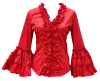
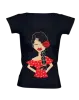
Si quieres tener un pequeño detalle con alguna amiga o una compi de la clase de baile o con tu profe, puedes optar por una camiseta clásica para usar en las clases de baile o tipo polo para un look casual. 


Una camiseta casual pero muy mona. Mira más modelos aquí.

Read more →
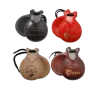
CÓMO ELEGIR LAS CASTAÑUELAS

CÓMO ELEGIR LAS CASTAÑUELAS

Si eres de los que se siente atraído por el mundo de las castañuelas pero aún tienes mil preguntas sin responder, en nuestro blog de hoy resolveremos todas tus dudas y te daremos algunos consejos para saber comprar las castañuelas correctas y más adecuadas a tus necesidades. ¡Empecemos!


Castañuelas de madera… ¿sí o no?


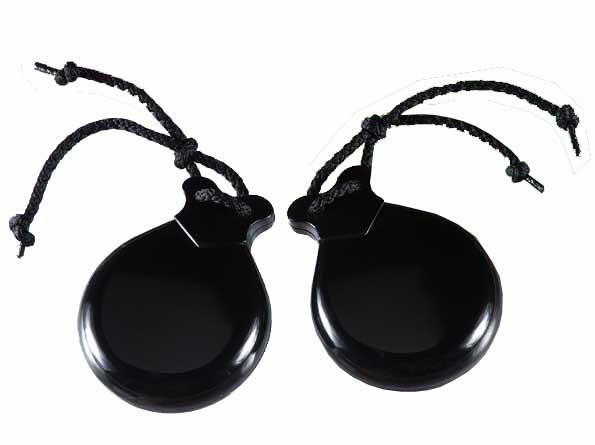
Muchas personas acuden buscando un par de castañuelas de madera. Lo cierto es que el uso de este material es algo anticuado. Anteriormente se usaban maderas como el ébano, el guayacán o el granadillo. Sin embargo, en la actualidad la fibra ha superado a la madera en la fabricación de castañuelas.

Las ventajas de la castañuela de fibra ante la castañuela de madera es que la primera es mucho más resistente a los cambios de temperatura y humedad, además de tener una mayor calidad sonora que la madera.


Castañuelas Profesionales de Madera Veteada


Read more →
And...the end of the classes arrived!

And...the end of the classes arrived!

Summer is here and with it comes the end of year for most dance schools. As always is time to prepare everything so everything comes out perfectly. In Flamencoexport we have a wide variety of products that could be useful if you are a student in the show that each year every dance academy or school prepares in this time of the year. Also, if you are a teacher and you are looking for clothes and accesories for your choreography to be spectacular, in our web you will find what you are searching for. Here we will show you a list of some of the most useful and comfortable products, perfect for ocassions like this:


  • Fans


We have a large selection of fans of all kinds and sizes, for adults and kids, that will make your choreography more spectacular and colourful. You can find them with all sorts of styles, elegants, with pollka dots and prints, in diferent colours, and, if you want to be original you can buy our special DIY fans


  • Castanets


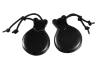
Another essential accesory to complement the dances are the castanets. They have a vibrant sound and in our web you can find them in different materials, specially made for all sorts of learning levels, sizes and several prices. Take advantage of them and make a party out of your dance using this beautiful and harmonious musical instrument.


Flamenco skirts


Skirts are one of the most important elements of a flamenco dance. In our web you can find them in all sorts of colours, sizes, for kids and adults, etc. We have a wide selection, all of them artisanal and made with the highest quality materials. Besides, they can be custom made if needed. 


Flamenco shoes


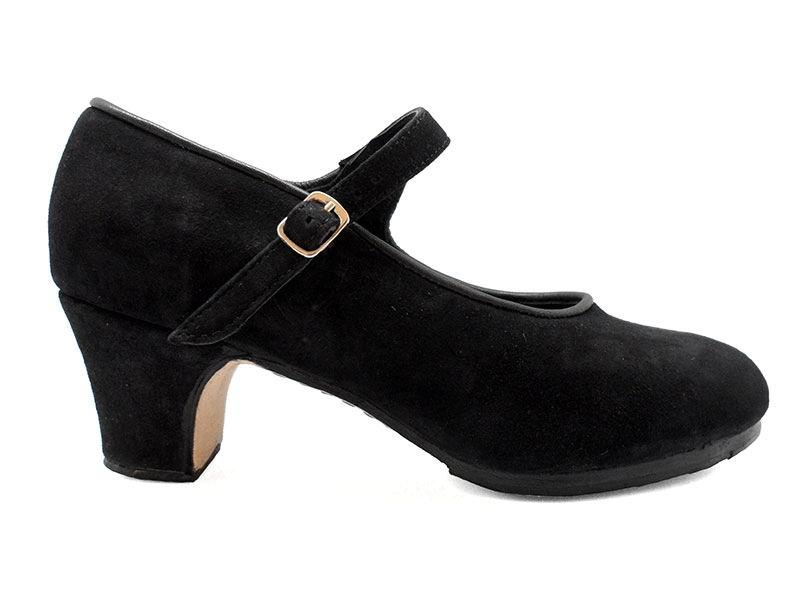
Every person that is involved in flamenco needs good shoes, the most important part of any dance. We offer a great variety of them for women and men, made in several materials, with or without nails, specifically made for the different learning levels of the students, and most important, comfortable and practical. In our page we sell all sorts of shoes from highly recognized and qualified brands, who make this footwear with the highest quality standards. And, of course, we also provide replacement nails to change them when needed.


  • Flamenco dance suits


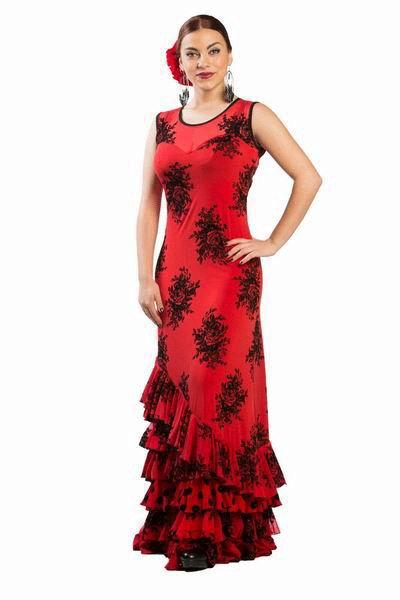
For those who are looking for the full outfit, in Flamencoexport we have also all sorts of flamenco dance suits, beautiful, economic, useful and perfect for any end of the year show. If you want your students to dress like professionals, this can be a really good option. 


  • Accesories


To complete the look, the accesories are an important part of it all. They bring colour, brightness and makes the dancers to stand out, be part of a group but at the same time show their own personality.


Read more →
Living the Pilgrimage of el Rocío de Huelva

Living the Pilgrimage of el Rocío de Huelva

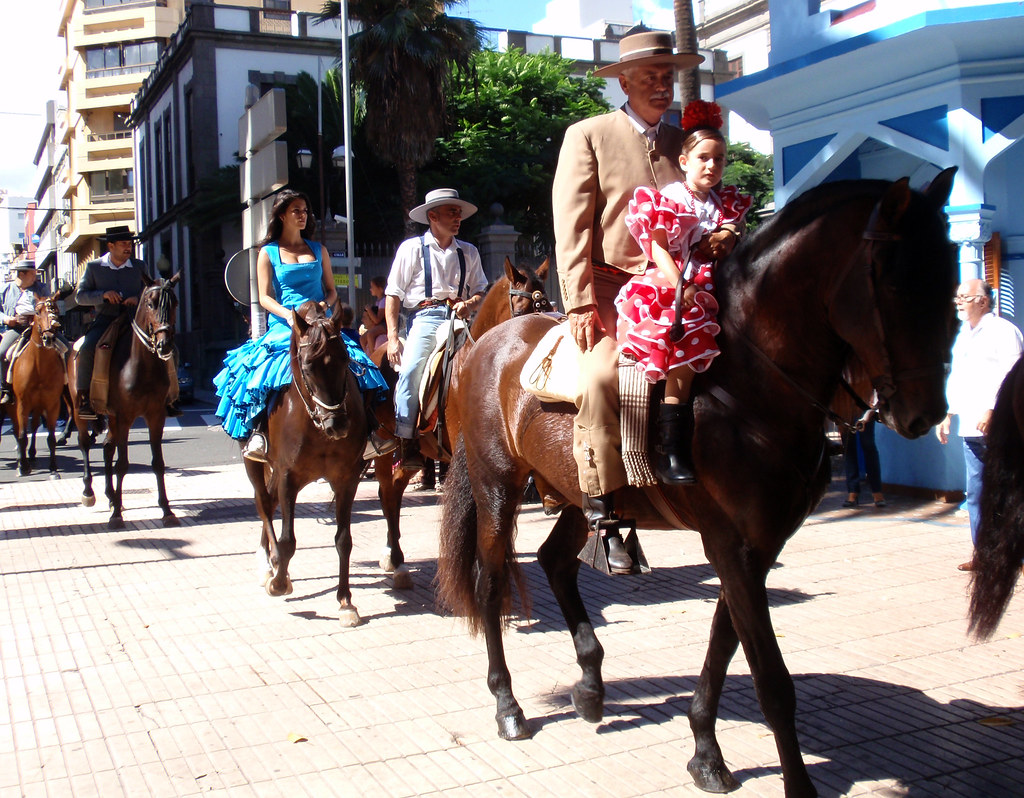
The pilgrimage of El Rocío of this year, that started yesterday, is a good ocassion to buy some beautiful flamenca dresses or campero suits, and be a part of the festive environment that happens during this days in Huelva. For everyone that is eager to experience what transpires these days during this popular fiesta, there is still time, the most important days are the 4th and 5th of june in the village of Almonte. Of course, you can find in our website a huge assortment of campero suits, dresses, blouses, pants and accesories as well as all of the necessary accesories and to dress traditionally and be part of this event. As basic tips for those who have the intention to go to the pilgrimage is good to remember a few things such as not carry to much weight, use light clothes, don't forget your camera and specially protect yourself from the sun.  


As a little background about this fiesta is always good to remember that the pilgrimage is a religious and very popular celebration in honor of la Virgen del Rocío, also known as the Blanca Paloma in Almonte, Huelva. Its celebrated the weekend of the Pentecost Sunday and includes a walk to the hermitage were her image is located. Usually the fiesta lasts a week even though the big days are the ones of the weekend, moment were the fervour of the parishioner is at its peak.


In this fiesta its celebrated the descent of the Holy Spirit and the start of the Church activity, and during these days, the village of Almonte, that normally has around 22.000 residents becomes the third city of Spain in number of people. The pilgrimage starts on Saturday with the Santo Rosario, and ends when the image of the virgin goes back inside the hermitage on Monday morning. El Rocío attracts every year a hundred of fraternities of each of the closest areas like Cádiz, Huelva y Sevilla. The pilgrims cross by foot and some times by boat, the marshlands of the Guadalquivir delta, to arrive to this fiesta, in the limit of the Natural Park of Doñana.


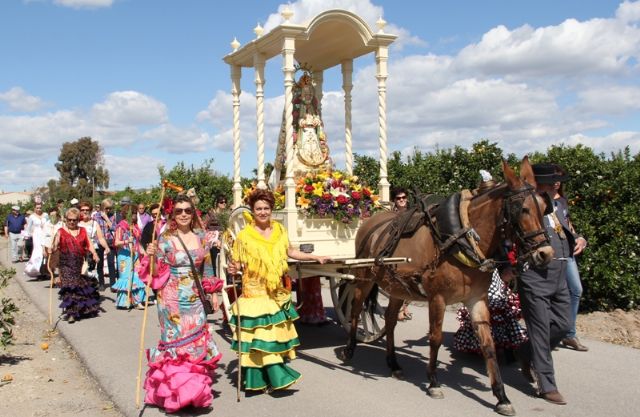
The procession starts when the pilgrims walk the road to the village, dressed with flamenco suits, by foot, by horse or in carriages pulled by donkeys or oxen. Through this week people sing during the day, and at night they camp around a bonfire, and thats when the fiesta starts and everyone sings, dances and shares food and wine. 


One of the most important moments of this fiesta happens at midnight, during Pentecostés Monday's dawn, when starts the Santo Rosario pray. Then, after the parade of the fraternities insignias in front of the hermitage, it happens the so called Jump to the Fence. A massive entry of the devoted inside the Blanca Paloma's temple, to take her out in procession. The virgin, in the street, over the shoulders of those who have had the honour of arriving where she was, is walked around between the parishioners. During the procession the bells doesn't stop to ring as the pilgrims cheer the virgin with rose petals.


This is a week full of passion, devotion, tradition, feelings and amusement. The pilgrimage of el Rocío is one of the most famous and massive ones that exists and constitutes the emblematic expression of the popular religiosity of Andalucía. That way, for those of you that are going to experience it for the fist time just enjoy it and let yourself loose.


Read more →
Shawls and combs, perfect accesories

Shawls and combs, perfect accesories

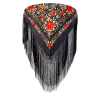
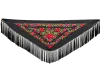
The manila shawls are square silk cloths decorated normally with vibrant colours with flowers, birds, etc, and finished with an exterior border with fringes. Its origins go back to the trade routes created by the spanish Empire with the asiatic continent, more specifically with China and Filipinas. It is from there where the shipments of oriental merchandise used to come, in between those things there were the shawls. Its popularity increased in Spain initially due to the prohibition of the Catholic Monarchs in 1492 of the use of veils. Moor women started, then, to use this oriental shawls to cover their heads and faces. 


Originally they were made in large sizes and in silk, and the decorations used to reflect the oriental flora and fauna with chrysanthemums, bamboos, dragons and birds originals from those lands. Over time and with the increment in the spanish demand they started to modify the shawls changing the embroidery with roses and carnations, and in Spain they introduced the fringes, original from the arab culture. This fringes were placed with silk thread and using the macrame and crochet techniques. The typical colours used to be black, white, ivory and red. The manufacture process started with the creation of a paper template in which there were made several perforations. Then, this template was used to create the marks with chalk over the cloth, and afterwards, with the help of a racket, the cloth was carefully embroidered. The work was finished with the placement of the fringes. In order for the shawls to arrive in the best possible condition to their destiny, special cases were manufactured in Filipinas to transport them. Squared boxes with lacqued and golden wood, decorated with mother-of-pearl inlays and chinese decorative motives
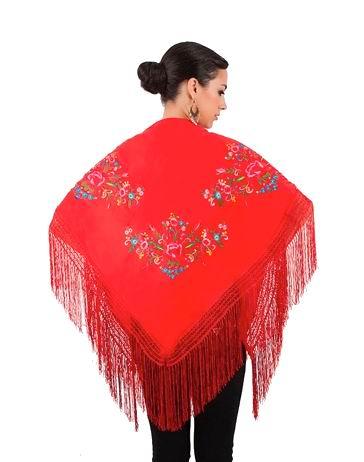


As for the right way of using them, the most common is on top of the shoulders, but also tied on the side or at the height of the hips. And for the proper way of storage them there is an expert way of folding it, though for most people who doesn't know how to do it, it is recommended to hang them in the wardrobe with a plastic cover over it. In case it is needed you can flip it over and gently go over it with the steam iron.

 
Regarding the types of manila shawls that exist, there are two traditional kinds that can be mentioned. On one hand there are the cigarreros (inmortalized in the Carmen de Bizet opera), decorated with big roses and carnations, embroidered in vibrant colours, with bamboo branches and flowers. On the other hand, there are the isabelinos, whose borders are decorated with flowers but the center part is empty. Each of the flowers that used to decorate the shawl had a special meaning: the violets were related to purity, the daisies to impatience, the roses to secrets and the sunflowers to loyalty. 


This way, little by little they became more and more popular until they ended up replacing classic shawls and headscarves in the XIX century. And over time a lot of new workshops began to appear in Sevilla to create their own collections. Also, the flamenco dancers borrowed the idea and integrated it into the dancing. Its use, however, was really complicated due to the fact that only the most expert dancers were able to use them in their dances as if the shawls were an extension of their bodies. 


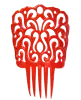
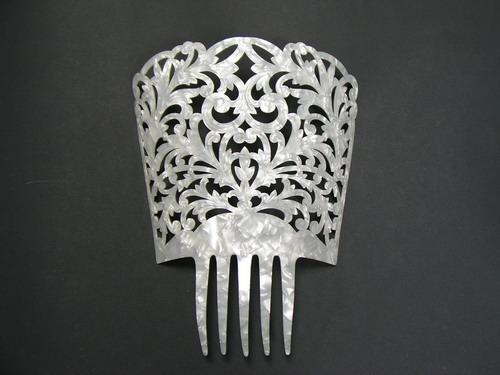
The combs, on the other hand, were feminine ornaments for the hair with a convex body and a group of spikes that fit in the bun. Originally they were manufactured with tortoiseshell, but this days they are mostly made out of synthetic materials. They became traditional in Spain at the end of the XVIII century, and the shawl is often a classic complement for it, since it stylizes women's figure. 


IMPORTANT:

If you are interested in buying any shawls or combs, you can visit our website were we have a huge selection in different colours, styles, etc. This are the best accesories for your flamenca dresses or to acompany your dances on stage. 


Read more →
Flamenco Export Help
Order status Customer Service

(+34) 91 542 72 51.
We’re open from Monday – Friday 10h-13:30h / 17:00-20:00h and Saturdays 10h-13:30h (GMT + 1).

 
In 2024, we will be closed for holidays on the 1st and 6th January, 28th, 29th, and 30th March, 1st, 2nd, and 15th May, 25th July, 15th August, 12th October, 1st and 9th November, 6th, 7th, and 25th December.
 
Our shop is located in Calle Campomanes nº 4, Madrid 28013 España (Ópera Metro Station)