




















© 2001-2008  FlamencoExport.com
Links::Track My Order::Ask a question

We export Flamenco on the world wide.

If you are looking for flamenco music, video or DVD, please visit: 
flamencoSound.com

Development by imaginanet.com


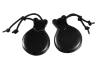
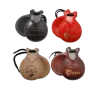
Flamenco Castanets Brown Rosewood Imitation.
#5030107

Flamenco Castanets Brown Rosewood Imitation.

 
Price:   7.85 € / 12.17 USD 
Availability:  3 days
Quantity:  
Price total:  

    View shopping cart  View shopping cart  


Castanet Jale.
The castanets are a percussion instrument.
Jale offers the most diverse line of castanets for amateurs, students and professionals. The manufacture of these castanets combines industrial and manual processes. Excellent value for price. Jale castanets are the most popular among dance students throughout the world.
Flamenco castanets for amateurs, students and professionals. the manufacture of these castanets combines industrial and manual processes.
- For beginners.
- Excellent value for price.
- Good quality.
One size: for woman and kids.

HOW TO PLAY CASTANETS
A castanet is a percussion instrument, very old and much used in Phoenicia civilization. Phoenician civilization was an enterprising maritime trading culture that spread across the Mediterranean during the first millennium BC, between the period of 1200 BC to 900 BC. Nevertheless, through the history castanets were used to evoke a Spanish atmosphere. Castanets are a part of the spanish cultural heritage (they are considered to be the spanish national instrument). That way the castanets are generally used to give colour and to evoke a Spanish musical atmosphere.
How to put on the castanets
 
First you must see which castanet in higher pitched than the other.
The higher pitched castanet is placed and the right hand and the castanet with the lower tone on the left hand. In order to do this, the cord of the castanets is put on the thumbs and then the other. The castanets must be tight, but not uncomfortably so.
 
Hand position
 
In order to practice maneuvering the castanets it very important to place the hands correctly. The correct position is with the fingertips toward each other and the palms turned toward the body.
 
Castanet in this hand must be played with these fingers: Little, annular, middle finger and index finger.
 
Once you have placed the castanet, pressure with the middle finger, annular, little at the same time.
 
THE RITHM
 
Will cording as follows first with the right hand the last sound being cut through with the left castanet and with only one note.
Once the castanets are in place and the hands are in the correct playing position, it is necessary to know that the clicks of the castanets are based on different combinations of five independente elements:
*  CA-RRE-TI-LLA: This element is used only by the right hand.                  Without forgetting to keep it turned toward the body, in the
corret position that wehave explained, and moving the wrist as little as possible, begin to play the CA-RRE-TI-LLA, wich is composed of four clicks: CA, with the little finger; RRE, with the ring finger; TI, with the middle finger; LLA, with the index finger.
·   TAN: This click is called TAN and is played by the left hand  immediately after the CA-RRE-TI-LLA. The click is played by the    ring finger and the middle finger at the same time.
·   TIN: The TIN sound is produced by the ring finger and the middle finger and the middle finger of the right hand and should sound after the CA-RRE-TI-LLA-TAN
·   TIAN: when the sound TIN and the sound TAN are played simultaneously, it is called the sound TIAN.
·   POSTICEO: This sound consists of the clicking together of the two castanets. In order to do this lift the right hand so that it is level with the left hand and click the castanets together.


People interested in this item
also bought:


Shoes with polka dots

[ 17.75 € ] / [ 27.51 USD ]


Castanet Thread

[ 2.60 € ] / [ 4.03 USD ]


Flamenco Castanet Cases

[ 7.35 € ] / [ 11.39 USD ]


Castanets course - Dvd

[ 17.95 € ] / [ 27.82 USD ]

Flamenco Castanets Brown Rosewood Imitation.

FlamencoExport Suggest


Whatever its characteristics, the castanets must be temperate in order to reach its complete sonority. You can achieve this only making them sound during many hours. Then you will have to take precautions: do not leave them “naked” after using them, put them in their cover.

The humidity and the extreme temperatures are harmful, and can cause breaks and cracks. For the castanets’ fabrication we join the traditional knowledge and the technique in order to obtain a solid castanet, which gives to the professional dancer an instrument with a precise and right sound.


Comentario FlamencoExport


A male and a female compose a couple of castanets. The female has a taller key than the male, depending on the opening between the two pieces. Each castanet piece can be divided in the following parts:
Heart: interior cavity.
Shell: interior and round part of the piece
Ears: upper part of the piece with two holes through which the rope passes to hold the two pieces together. The castanet is held by passing fingers through the rope.
Bridge: it is the narrowest part of the instrument, where the two ears connect. It is also called “bisagra”.
Point: it is the place where both pieces touch each other at the base of the shell. The quality of the sound depends very much of it.
Lip: it is the stripe between the circle that borders the heart and the edge of the shell. Sometimes the lip has a small relief in form of an escudo that separates the ears from the piece’s part.