
























• home
  • Contact Contact
  • home (0034) 91 5427251
    Our customer service timetables in spanish, french and english are from monday to friday, from 10h-13:30h & 16:30h-20h CET, in japanese from monday to friday, from 17h-20h, saturdays 10h-14h.

    We will be closed on the days:1st of january, 18 of march, 28 and 29 of march, 6, 8, 24 and 25 of december.

  • Help Help
  • Track order Track order
  • Wholesalers Access Wholesalers Access
  • Blog Blog
  • TV TV
  • FACEBOOK Facebook
  • TWITTER Twitter
Order Track order FAQS Help Access Wholesalers Access

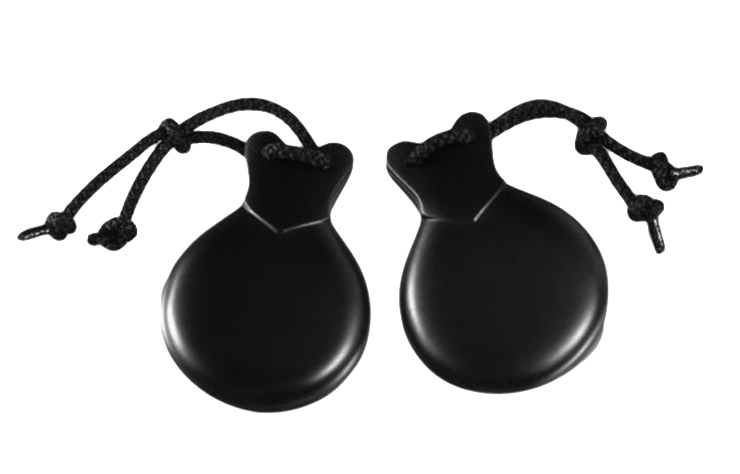
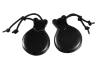
Castanets / Bolero Black Fibre flamenco castanets

Bolero Black Fibre flamenco castanets

Ref: 504740006 Product version to print Bolero Black Fibre flamenco castanets

38'50 € VAT free
* 49'55 USD
* The price in USD is an indicator, as the exchange rates are changing constantly.
Shipment within 15 business days
Castañuelas para flamenco modelo bolero negro fibra nº 5 The castanets are a percussion instrument. Filigrana, this is one of the most experienced artesan establishments in the flamenco market (Sevill… Read more

Available options

T - 5

Add to basket


Description

Castañuelas para flamenco modelo bolero negro fibra nº 5

The castanets are a percussion instrument.
Filigrana, this is one of the most experienced artesan establishments in the flamenco market (Sevilla, España). 
The company of craftsmen based in Seville offers highly resilient castanets, which are not susceptible to atmospheric changes and which give a precise sound and greater volume than wooden models. For the castanet's fabrication we join the traditional knowledge and the technique in order to obtain a solid castanet, which gives to the professional dancer an instrument with a precise and right sound.
- Flamenco castanets with andalusian traditional style threads.
- Bolero Black Fibre flamenco castanets for professionals.
- Pouch included.

Measurements:
6'9 x 8'9 ctms.
2'7 x 3'5 Inches.

HOW TO PLAY CASTANETS
 
A castanet is a percussion instrument, very old and much used in Phoenicia civilization. Phoenician civilization was an enterprising maritime trading culture that spread across the Mediterranean during the first millennium BC, between the period of 1200 BC to 900 BC. Nevertheless, through the history castanets were used to evoke a Spanish atmosphere. Castanets are a part of the spanish cultural heritage (they are considered to be the spanish national instrument). That way the castanets are generally used to give colour and to evoke a Spanish musical atmosphere.
 
How to put on the castanets
 
First you must see which castanet in higher pitched than the other.
The higher pitched castanet is placed and the right hand and the castanet with the lower tone on the left hand. In order to do this, the cord of the castanets is put on the thumbs and then the other. The castanets must be tight, but not uncomfortably so.
 
Hand position
 
In order to practice maneuvering the castanets it very important to place the hands correctly. The correct position is with the fingertips toward each other and the palms turned toward the body.
 
Castanet in this hand must be played with these fingers: Little, annular, middle finger and index finger.
 
Once you have placed the castanet, pressure with the middle finger, annular, little at the same time.
 
THE RITHM
 
Will cording as follows first with the right hand the last sound being cut through with the left castanet and with only one note.
Once the castanets are in place and the hands are in the correct playing position, it is necessary to know that the clicks of the castanets are based on different combinations of five independente elements:
*  CA-RRE-TI-LLA: This element is used only by the right hand.                  Without forgetting to keep it turned toward the body, in the
corret position that wehave explained, and moving the wrist as little as possible, begin to play the CA-RRE-TI-LLA, wich is composed of four clicks: CA, with the little finger; RRE, with the ring finger; TI, with the middle finger; LLA, with the index finger.
·   TAN: This click is called TAN and is played by the left hand  immediately after the CA-RRE-TI-LLA. The click is played by the    ring finger and the middle finger at the same time.
·   TIN: The TIN sound is produced by the ring finger and the middle finger and the middle finger of the right hand and should sound after the CA-RRE-TI-LLA-TAN
·   TIAN: when the sound TIN and the sound TAN are played simultaneously, it is called the sound TIAN.
·   POSTICEO: This sound consists of the clicking together of the two castanets. In order to do this lift the right hand so that it is level with the left hand and click the castanets together.


Who bought these items, bought as well

Reviews

Write a comment